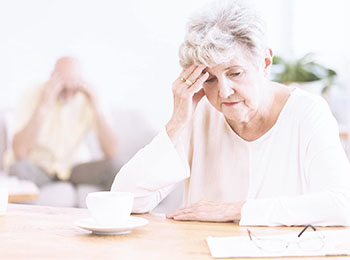
Dementia Treatment
Dementia is a generalized decline of intellect, memory, also personality, without impairment of consciousness, leading to functional impairment.
Dementia is a mental condition that affects cognitive functions of reasoning, thinking, behaving and remembering. This reduces various skills that are essential for everyday life like problem-solving, memory power, the ability to pay attention, visual perception and self-management abilities. People diagnosed with dementia also find it difficult to control their emotions. It most commonly occurs in older people, specifically in people above 85 years, and it is commonly misunderstood to be a part of ageing.
Dementia usually occurs due to an impairment in neuron (brain cell) function, particularly when healthy nerve cells of the brain lose connections or stop working with other brain cells.
Factors that cause dementia vary according to the type of changes taking place in the brain. Most older adults diagnosed with dementia have Alzheimer's disease ; it is the most common cause of dementia. Vascular dementia, Lewy body dementia and frontotemporal disorders are some types of dementia. These dementias occur individually or even in a combination of two or more types and are known as mixed dementia, for example, vascular dementia and Alzheimer’s disease.
Not all causes of dementia are reversible. However, homeopathic therapies can help slow down the progression of dementia. The medicines for dementia are prescribed based on the totality of symptoms of dementia. Agaricus muscarius, belladonna, calcarea phosphorica, hyoscyamus niger, mercurius solubilis, lilium tigrinum, opium and anacardium orientale are the most commonly used homeopathic remedies for dementia.
Homeopathic Treatment of Dementia
Homeopathy treats the person as a whole. It means that homeopathic treatment focuses on the patient as a person, as well as his pathological condition. The homeopathic medicines selected after a full individualizing examination and case-analysis.
Which includes
- The medical history of the patient,
- Physical and mental constitution,
- Family history,
- Presenting symptoms,
- Underlying pathology,
- Possible causative factors etc.
A miasmatic tendency (predisposition/susceptibility) also often taken into account for the treatment of chronic conditions.
What Homoeopathic doctors do?
A homeopathy doctor tries to treat more than just the presenting symptoms. The focus is usually on what caused the disease condition? Why ‘this patient’ is sick ‘this way’?
The disease diagnosis is important but in homeopathy, the cause of disease not just probed to the level of bacteria and viruses. Other factors like mental, emotional and physical stress that could predispose a person to illness also looked for. Now a days, even modern medicine also considers a large number of diseases as psychosomatic. The correct homeopathy remedy tries to correct this disease predisposition.
The focus is not on curing the disease but to cure the person who is sick, to restore the health. If a disease pathology not very advanced, homeopathy remedies do give a hope for cure but even in incurable cases, the quality of life can greatly improve with homeopathic medicines.
For more information, visit at Dr. Avtar Mavi’s Homeopathic clinic in Jalandhar.